
 EN
EN
The Evolution of the Concrete Spreader: From Manual Operation to Autonomous Systems
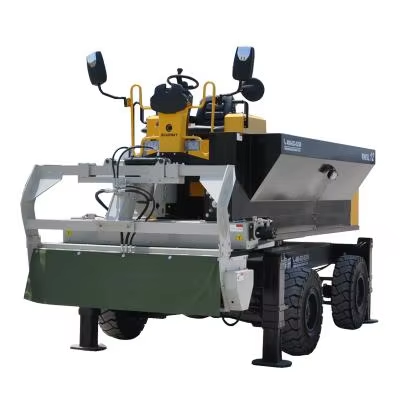
Historical Shifts in Concrete Spreader Design and Control Architecture
Back in the day, concrete spreaders were all about what the operator could do by hand, which meant pouring thickness varied quite a bit across jobsites. People wasted materials left and right, not to mention having to fix things multiple times because of inconsistencies. Manual levers just weren't responsive enough when working on big areas or rough terrain where precision matters most. Things got better around the 90s when hydraulics started showing up on equipment instead of those old mechanical parts everyone had been using before. But even with these improvements, tired workers still made mistakes that slowed down projects considerably. Some studies suggest delays from these issues can eat up around $18k each day lost on site according to Construction Productivity Journal last year. What really changed everything though was when PLC technology entered the picture. These programmable controllers allowed machines to spread concrete consistently without relying so much on someone's guesswork for routine operations anymore.
How Modern Concrete Spreader Platforms Integrate Sensors, Hydraulics, and GPS Guidance
Today’s concrete spreaders achieve millimeter-grade accuracy by synchronizing three foundational technologies:
- Multi-axis sensors measure concrete viscosity and bed depth up to 200 times per second
- Electro-hydraulic valves dynamically adjust flow rates using real-time terrain feedback
- RTK-GPS (Real-Time Kinematic Global Positioning System) guides positioning within a 2 cm tolerance
This convergence enables autonomous navigation along preloaded site maps while continuously compensating for subgrade irregularities. Field data shows cycle time reductions exceeding 40% and a 29% drop in wasted concrete during slip-form paving (ASCE, 2023). Eliminating manual grade-checking also cuts labor costs by 15–18% per kilometer of placed concrete.
Smart Concrete Spreader Automation: Precision, Efficiency, and Labor Optimization
Real-Time Grade Control and Adaptive Spreading Using Onboard Feedback Loops
Today's modern spreader equipment incorporates closed loop control technology that combines laser guided elevation sensing with hydraulic actuation for real time material flow management. When surfaces change their shape even just a little bit, these systems automatically tweak parameters including spread width, operating speed, and vibration patterns without missing a beat. The result? A remarkable consistency within plus or minus 2 millimeters throughout important projects such as bridge deck surfacing and foundation work on tilt up walls. Research published in the Construction Automation Journal back in 2023 shows that these advanced systems cut down on leveling mistakes compared to older techniques by roughly 80 percent according to independent testing.
Reduction in Rework and Material Waste Through Consistent Concrete Spreader Performance
PLCs keep things running smoothly at just the right speed, with proper vibration levels and spread width, so materials get distributed evenly without all that human error factor. When there's less variation in how stuff gets laid down, we see fewer problems with pouring too much or too little concrete. And since concrete costs around $150 for each cubic yard these days, this makes a real difference in waste reduction. The system also eliminates those pesky low and high spots that end up needing grinding work, patches, or even whole slabs replaced. According to ACI Concrete International from 2022, this cuts down on rework labor by about 30%. What matters most though is that smoother surfaces actually last longer and hold up better structurally over time.
AI and Digital Integration in Concrete Spreader Operations
BIM-Linked Concrete Spreader Systems for Pre-Construction Simulation and Field Execution
When Building Information Modeling gets integrated into projects, it really connects what's planned with what actually happens on site. Contractors can run simulations for things like where materials go, how much they need, and when everything should happen all digitally before anyone shows up at the jobsite. Once work starts happening in the field, those spreaders connected to BIM systems rely on GPS signals along with detailed terrain maps to stay right on track following the original design specifications down to the millimeter. According to some recent research from construction efficiency reports back in 2023, this kind of digital to physical transition cuts down setup mistakes by about 40 percent. Plus workers can tweak the thickness of pours as they go based on what they find during actual construction, and still keep everything compliant with the initial design requirements.
IoT Telematics and Predictive Maintenance for Fleet-Wide Concrete Spreader Uptime
Sensor networks embedded throughout machinery constantly track things like hydraulic pressure levels, engine workload, and how parts are wearing down over time. When these sensors collect all that information, cloud systems analyze it to predict when maintenance might be needed somewhere around 200 to 300 operating hours before actual failure points would normally occur. Smart fleet operators then plan their maintenance work during scheduled breaks rather than waiting for breakdowns, which can actually make equipment last about 15 to 20 percent longer overall. Looking at real world examples from telematics studies in 2024 shows something pretty interesting too: companies using remote diagnostic tools saw their emergency repair bills drop by roughly 30%. This kind of proactive approach means machines stay operational much more consistently even when they're spread out across multiple job locations.
Frequently Asked Questions
What are the major advancements in concrete spreader technology?
Concrete spreaders have evolved from manual operations to utilizing hydraulics, sensors, and AI systems. Modern spreaders now achieve high precision and efficiency through technologies like multi-axis sensors, electro-hydraulic valves, and RTK-GPS.
How does digital integration improve concrete spreading?
Digital integration, such as BIM-linked systems and IoT telematics, allows for precise pre-construction simulations, real-time data analysis, and predictive maintenance, reducing setup errors and maximizing uptime and efficiency.
What cost savings are associated with modern concrete spreaders?
Modern concrete spreaders significantly reduce waste, labor costs, and rework. Sensor and PLC technology ensures consistent performance, increasing material accuracy and reducing costs related to excess concrete, labor, and repairs.