
 EN
EN
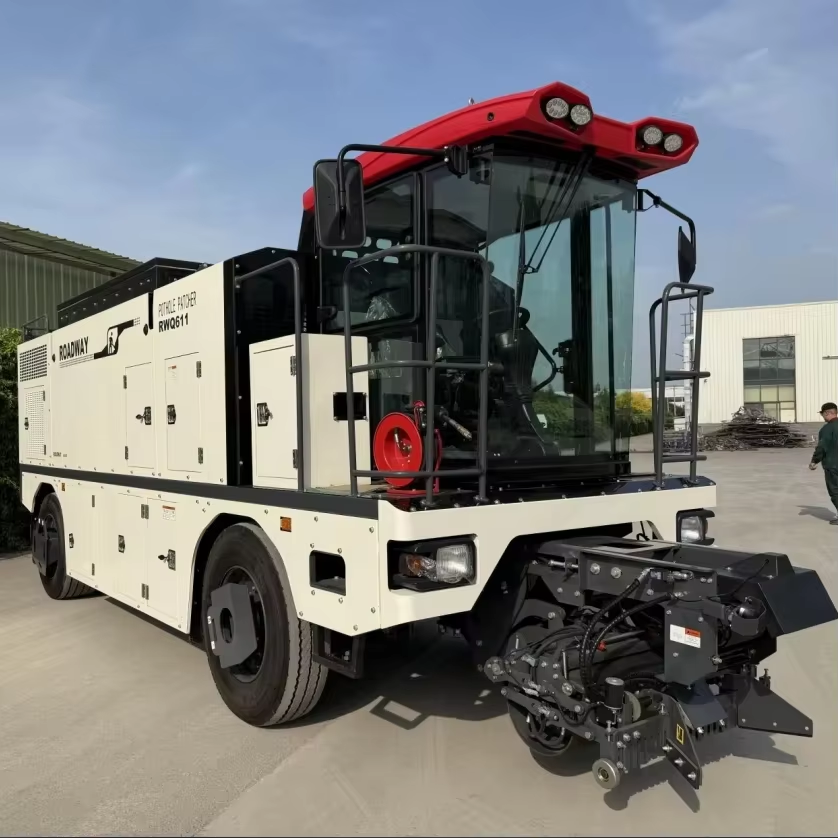
How the ROADWAY Boom-Type Laser Screed Delivers Unmatched Leveling Precision and Speed
Sub-3mm Flatness Tolerance at 15+ m/min: The Role of Integrated Laser Guidance and Hydraulic Boom Kinematics
Laser screed systems today reach new levels of accuracy thanks to their laser guidance systems working hand in hand with hydraulic components. The system works with a full circle laser transmitter that sets out a very accurate reference point. At the same time, there are two receiver units on the screed head that can spot tiny changes in height down to about 0.1 millimeters. When these measurements come in, they trigger quick responses from powerful hydraulic cylinders which adjust the screed head position almost instantly. These adjustments happen with incredible precision at the millimeter level. What makes this possible is the special design of the boom itself. Its multi axis setup keeps pressure steady across the surface even when dealing with rough ground conditions beneath. This allows operators to work continuously at speeds above 15 meters per minute while still maintaining flatness within 3mm or better according to ACI standards. By combining all these features together, traditional methods of checking grades manually become unnecessary. The result is much more consistent concrete density throughout the pour. Contractors report seeing around 70% less need for grinding after pouring completes. For industrial flooring projects needing FF/FL ratings of 50 or higher, these advanced systems have become practically indispensable.
Real-World Impact: 42% Faster Slab Completion vs. Traditional Vibratory Screeds "“ Austin Logistics Hub Case Study (2023)
Real world testing has shown that boom type laser screeding delivers serious benefits on construction sites. Take the recent Austin Logistics Hub job in 2023 where crews managed to install 18,000 square meters of warehouse floor space over just 11 days using ROADWAY's boom type laser screed technology. That's roughly 42 percent quicker than what they saw in areas where workers used old school walk behind vibratory screeds. What makes this possible? The system completely does away with those tedious stringline setups and lets concrete pour continuously across entire 20 meter bays without stopping. This prevents those pesky cold joints from forming even when dealing with complicated rebar arrangements that would normally slow things down. Workers were able to maintain around 125 square meters per hour productivity rate, way above the 73 square meters per hour mark achieved with conventional methods because there were so many fewer stops for checking levels manually. Site managers didn't have to deal with any flatness issues requiring rework at all, and overall labor time dropped by about 27%. This meant tenants could move into their new facilities three whole weeks earlier than planned, and everything still met the required FF/FL 50 standards for floor flatness.
Laser Screed ROI: Quantifying Labor Savings, Material Efficiency, and Schedule Acceleration
Labor Reduction (37% Avg.) and Elimination of Rework Cycles Through Consistent, Operator-Independent Control
The ROADWAY boom type laser screed cuts labor needs by around 37% when it comes to controlling grades, setting up the screed, and managing vibrations during the process. What makes this system stand out is how precise it stays without needing constant operator input, keeping surfaces within just 3 mm flat even if the crew isn't super experienced. Most contractors we talk to mention almost no need for fixing surfaces after the fact, which stands in stark contrast to traditional methods where folks often end up doing 15 to 20% rework. The reliability of results really helps keep projects on track, particularly important for jobs where different trades need to coordinate closely and timelines are already packed tight.
Reduced Material Waste (â8%) and Earlier Project Handover: Financial Benefits Beyond Daily Productivity
Precise grade control helps cut down on over-pouring so material waste stays around 8% or less, which is way better than the typical industry range of 12 to 18%. The hydraulic boom can reach between 12 and 25 meters, allowing for placing concrete without joints across large spaces. This means no weak spots from those intermediate joints that tend to cause expensive problems down the road. When we look at all factors together including non-stop operation and less time lost during breaks, projects finish slabs about 42% faster according to records. Getting things done sooner means money comes in quicker too. For places like warehouses, shopping centers, and factories, this matters a lot since contracts usually require floors to be certified before anyone can start using them or signing leases.
| Cost Factor | Traditional Methods | Laser Screed System | Reduction |
|---|---|---|---|
| Labor Requirements | 100% Baseline | 63% | 37% |
| Material Waste | 15% (Avg.) | â8% | âª46% |
| Rework Cycles | 3"“5 per project | â1 | âª80% |
These efficiencies compound strategically: lower labor and material costs reduce direct project expenses, while accelerated timelines improve equipment utilization and open capacity for follow-on contracts"“transforming laser screed investment from a line-item productivity tool into a core driver of enterprise-level financial performance.
Optimal Applications for the ROADWAY Boom-Type Laser Screed on Large-Scale Projects
Seamless 12"“25m Width Coverage Without Joint Interruptions or Stringline Setup
ROADWAY's boom type laser screed can handle widths from 12 to 25 meters all in one continuous pass. This means no more cold joints forming, and workers don't have to deal with string lines, check formwork alignment constantly, or manage those intermediate screed transitions that take so much time. For places like distribution centers, warehouses, and cold storage facilities, these smooth surfaces make a big difference. Forklifts cause less vibration on them, there's far less maintenance required over time, and automated guided vehicles just glide right across without issues. When it comes to setup, we're talking about cutting down on time spent getting everything ready by around 40% compared to old school methods. Plus, when companies stop needing all that joint forming hardware, it makes life easier for logistics teams and simplifies safety protocols across the board.
Balancing Boom Reach and Site Constraints: Best Practices for Urban and Confined Job Sites
In tight urban spaces like parking garages, mixed use developments, and retrofits where room is at a premium, telescopic booms with their adjustable reach from 12 to 20 meters let workers place the equipment completely outside the pouring area. These machines can pivot accurately and move responsively through hydraulics, making it possible to work around columns, walls, and those pesky MEP penetrations while still maintaining proper grading. Getting good results really depends on planning out where the boom will go ahead of time, timing the pouring sequence with when the steel structures are being put up, and using special foam filled tires so they don't knock over any exposed rebar as they roll around. Contractors have tested these methods successfully in several dense city construction projects recently.
FAQ Section
What is the main advantage of using the ROADWAY Boom-Type Laser Screed?
The main advantage of using the ROADWAY Boom-Type Laser Screed is its unparalleled leveling precision and speed. It delivers sub-3mm flatness tolerance while operating at speeds of over 15 meters per minute, thanks to integrated laser guidance and hydraulic boom kinematics.
How does laser screeding improve construction site efficiency?
Laser screeding improves construction site efficiency by eliminating the need for manual grade checking, reducing the occurrence of rework, and facilitating faster slab completion. This technology allows for continuous concrete pouring, significantly enhancing productivity and reducing labor time.
What financial benefits can be expected from laser screeding?
Financial benefits from laser screeding include labor savings, reduced material waste, and earlier project handovers. This means direct project expenses are lowered, equipment utilization is improved, and there's increased capacity for follow-on contracts.
What are optimal applications for the ROADWAY Boom-Type Laser Screed?
The ROADWAY Boom-Type Laser Screed is ideal for large-scale projects such as distribution centers, warehouses, and cold storage facilities. It is especially effective in urban and confined spaces where seamless width coverage without joint interruptions is crucial.
Table of Contents
- How the ROADWAY Boom-Type Laser Screed Delivers Unmatched Leveling Precision and Speed
- Laser Screed ROI: Quantifying Labor Savings, Material Efficiency, and Schedule Acceleration
-
Optimal Applications for the ROADWAY Boom-Type Laser Screed on Large-Scale Projects
- Seamless 12"“25m Width Coverage Without Joint Interruptions or Stringline Setup
- Balancing Boom Reach and Site Constraints: Best Practices for Urban and Confined Job Sites
- FAQ Section
- What is the main advantage of using the ROADWAY Boom-Type Laser Screed?
- How does laser screeding improve construction site efficiency?
- What financial benefits can be expected from laser screeding?
- What are optimal applications for the ROADWAY Boom-Type Laser Screed?