
 EN
EN
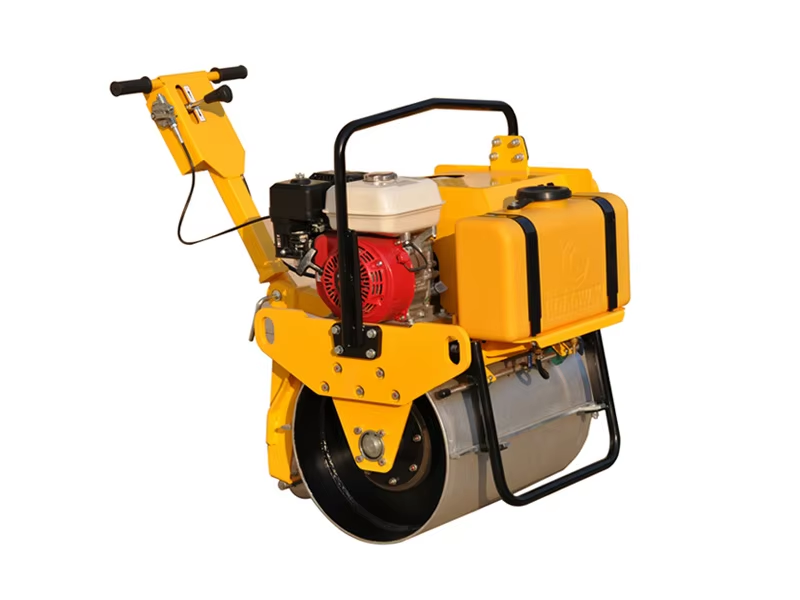
Compact Design and Superior Maneuverability for Tight-Space Applications
Tight-Space Navigation: Optimizing Driveway, Pathway, and Landscaping Compaction
Walk behind vibratory rollers really shine when working in tight spots that regular compactors just can't handle. These machines have narrow bodies, usually narrower than 36 inches, plus they come with flexible frames that let workers get around all sorts of obstacles like landscape elements, power poles, and those retaining walls so common in urban settings. The machines can turn on a dime too, with a radius between six and ten feet, which means operators don't need to keep moving them back and forth constantly. This makes a big difference when working close to buildings or along those tricky paver joints. Jobs take about 40% less time overall for home projects compared to bigger machinery, and folks who actually operate these things say they experience roughly 30% less tiredness after doing detailed pathwork since there's not as much need to manually adjust position throughout the day.
Engineering Advantages: Weight Distribution and Minimal Turning Radius
When weight is properly distributed between 1,200 to 1,500 pounds across a drum measuring 24 to 36 inches, these machines deliver powerful compaction forces without damaging surfaces underneath. This makes them particularly useful for working on asphalt overlays and decorative stone installations where surface integrity matters. The centrifugal force system keeps things steady even when operating on inclines as steep as 20 degrees, something that's definitely appreciated by crews tackling uneven terrain. With dual hydraulic circuits built in, operators can change directions almost instantly during jobs. Articulated frames also help out big time around obstacles since they basically eliminate those pesky dead spots that waste time and effort. And let's not forget about the compact turning radius either. Machines designed with pivot points close to the drum axis can turn tighter circles than many walk behind mowers actually can. That means getting complete 360 degree compaction around trees, signs, or other fixed objects becomes much less of a headache.
Feature |
Tight-Space Impact | Technical Advantage |
|---|---|---|
| Width Profile | Navigates 36" gates/alleys | Steel-reinforced frame prevents flex |
| Turning Radius | <10 ft operational circle | Articulated joint reduces scrub resistance |
| Weight Concentration | Avoids turf/paver damage | Centered mass optimizes centrifugal force |
Vibratory Performance Essentials: Amplitude, Frequency, and System Reliability
Core Vibration Metrics: How Amplitude and Frequency Deliver Consistent Compaction
The amplitude, which refers to how far the drum moves up and down vertically, plays a key role in determining how deep the compaction goes. Frequency, measured as vibrations per minute (VPM), affects how dense the surface becomes and helps particles lock together properly. When working with aggregates, keeping amplitudes at moderate levels is important to avoid breaking them apart. For most jobs, operators aim for frequencies around 1,500 to 3,000 VPM because this range allows the particles to settle into their best possible arrangement. Today's equipment often comes equipped with load sensing tech that can tweak both these settings automatically as the machine moves from loose soil to harder ground conditions. What makes this feature so valuable is that it keeps the compaction force steady throughout the job site. This means no weak areas getting missed and prevents damage to delicate surfaces such as asphalt without sacrificing the necessary strength for structural support.
Hydraulic vs. Mechanical Drive: Impact on Control, Consistency, and Maintenance
The hydraulic drive system gives continuous control of both amplitude and frequency which allows for small adjustments when the material being worked on changes resistance levels. This makes them really good for sites where different materials are mixed together. What's great about this kind of system is how it keeps applying steady compaction force even when conditions vary around the job site. But there's a catch too. Operators need to keep a close eye on the fluid levels and regularly check those seals for wear and tear. Mechanical drives work differently. They use gears directly connected to produce vibrations at set intensities. These systems have fewer parts that need attention mainly just keeping bearings properly lubricated and checking clutches from time to time. While they're easier to take care of overall, the downside is their inflexible nature tends to create uneven results in soil mixes that aren't uniform across the entire area being compacted.
| Feature | Hydraulic Drive | Mechanical Drive |
|---|---|---|
| Control | Precise real-time adjustments | Fixed vibration settings |
| Consistency | Stable under load variations | Fluctuates with resistance |
| Maintenance | Fluid/seal monitoring | Bearing/gear lubrication |
| Adaptability | High (auto-adjusts) | Limited (manual changes) |
Hydraulic systems are preferred for precision-critical applications like paver joints; mechanical drives suit uniform subgrades with predictable resistance.
Operator-Centric Design: Ergonomics, Safety, and Fatigue Reduction
When operators are comfortable, they tend to be more productive, especially when working on those smaller compaction jobs. Modern vibratory rollers come equipped with things like ergonomic seating, controls that can be adjusted to fit different body types, and systems that cut down on vibrations. All these features make a real difference in reducing fatigue and keeping operators aware of what's going on around them, which matters a lot at residential sites where people walk by all the time. The instruments are placed where they should be easy to reach, and there's good visibility around the drum area too, making operations both safer and faster. Occupational health reports show that about one third of all injuries in construction work involve muscles and bones getting hurt somehow. So it makes sense why manufacturers keep improving these comfort aspects over time.
Safety features built into modern equipment often feature rollover protection structures along with emergency stop mechanisms designed specifically for rough or unpredictable terrain conditions. The machines run quietly and produce less whole body vibration, which helps keep workers focused during long shifts. This means better reaction times and more consistent drum contact with the ground surface something that really affects how evenly materials get compacted and ultimately impacts road lifespan. When operators are comfortable, they tend to work about 22 percent faster when doing those same old tasks day after day, such as compacting joints between pavers. Not only does this lead to better quality work overall, but it also satisfies important health and safety standards especially crucial on tight construction sites where space is limited.
Proven Small-Project Applications: From Residential Driveways to Paver Installations
Case Evidence: Efficient Compaction on a 200-SF Interlocking Paver Project
In a recent job involving about 200 square feet of interlocking pavers, a small vibratory roller really shone when it came to getting the job done right. The crew managed to get even density throughout the whole area within just two hours flat, which cut down on how long the site was out of commission. No more gaps between the pavers either, so everything looked neat and tidy. What made this machine stand out was its zero tail swing feature. This meant operators could move around flower beds and other landscape elements without worrying about knocking things over or damaging those tricky edges. The roller's special vibration pattern packed down the gravel underneath without messing up the carefully laid pavers above. After watching this in action, it becomes pretty clear why smaller compaction machines are becoming so popular for jobs where big rigs simply wouldn't fit or work well.
FAQ
What is the advantage of using a walk-behind vibratory roller in tight spaces?
Walk-behind vibratory rollers are particularly useful in tight spaces due to their compact design, which allows for superior maneuverability around obstacles such as landscape elements, power poles, and retaining walls. They offer efficient compaction without the need for constant repositioning, reducing project time by about 40% compared to larger machinery.
How do vibratory rollers ensure effective compaction?
Vibratory rollers ensure effective compaction through careful weight distribution and settings for amplitude and frequency. The amplitude determines the compaction depth, while frequency affects surface density. Load sensing technology adjusts settings automatically for consistent compaction across diverse soil conditions without damaging delicate surfaces like asphalt.
Why are hydraulic drive systems preferred in certain applications?
Hydraulic drive systems are preferred in precision-critical applications because they allow for real-time adjustments in amplitude and frequency, maintaining steady compaction force despite material variations. Though requiring more maintenance, they offer improved control and consistency over mechanical drives.
How do ergonomics and safety features in vibratory rollers enhance operator productivity?
Ergonomics and safety features such as adjustable seating, reduced vibrations, and clear visibility contribute to operator comfort, reducing fatigue and enhancing productivity. Features like rollover protection structures and emergency stop mechanisms ensure safe operation in unpredictable terrain conditions.
Table of Contents
- Compact Design and Superior Maneuverability for Tight-Space Applications
- Vibratory Performance Essentials: Amplitude, Frequency, and System Reliability
- Operator-Centric Design: Ergonomics, Safety, and Fatigue Reduction
- Proven Small-Project Applications: From Residential Driveways to Paver Installations
- FAQ