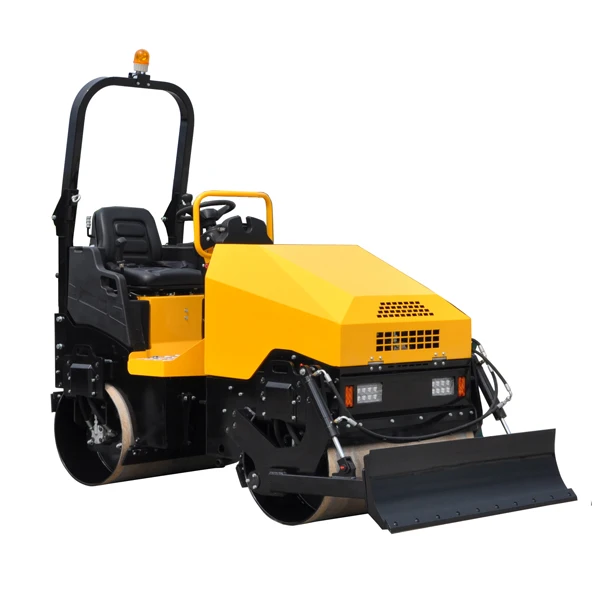
The price of a double-drum vibratory roller is not a fixed figure but is closely tied to its specific application scenarios and performance requirements. Understanding its broad range of applications is key to determining the necessary equipment specifications and ultimately establishing a reasonable investment budget.
This machinery serves as a core component in modern infrastructure development, with its primary applications being road construction and highway paving. It is employed to compact asphalt base courses, binder courses, and wearing courses, ensuring the formation of smooth, durable, high-density road surfaces. It is extensively used in municipal roads, urban streets, and asphalt overlay projects for road rehabilitation.
In large-scale industrial and commercial projects, the double-drum roller plays a foundational role. It provides highly stable ground for constructing large warehouses, industrial parks, and commercial buildings, and is specifically employed to compact foundations for parking lots, logistics complexes, and airport runways and taxiways subjected to extreme loads. Additionally, it prepares robust, non-settling subgrades for industrial floor slabs in large facilities.
For critical civil engineering projects like earthworks and dam construction, the double-drum roller is essential for achieving engineering-grade compaction. It compacts earth-fill dam bodies and clay cores to ensure structural integrity and impermeability, reinforces levees and flood barriers, and prepares subgrades for any major construction project to prevent future settlement.
This equipment also finds application in landfill and recycling operations. It compacts municipal solid waste (MSW) to maximize landfill space utilization and enhance stability, and is used to compact treated soil or cover materials in environmental remediation projects.
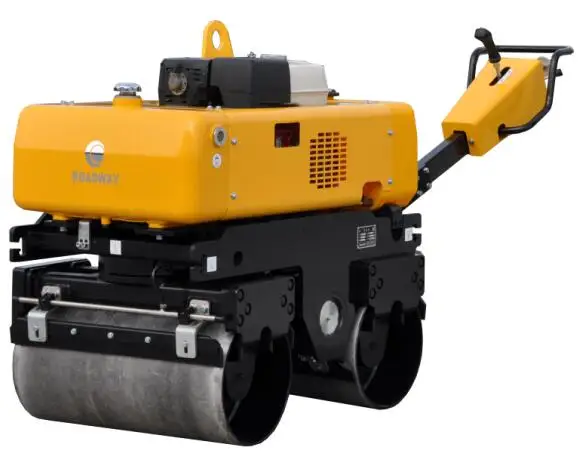
Finally, for trench compaction and confined spaces requiring precision work, smaller double-drum rollers are ideal. They effectively compact backfill soil around newly installed water pipes, gas lines, and fiber optic cables to prevent ground settlement, and are suitable for restricted urban sites, operations near existing infrastructure, or within tunnels.
In summary, your specific application—whether constructing highways, compacting industrial sites, or handling trench backfill—directly determines the required machine's operating weight, drum width, vibration frequency, and engine power. These technical specifications ultimately influence the equipment's price. Therefore, clearly defining your project requirements is the first step toward selecting the most cost-effective equipment, rather than merely seeking the lowest price.

 EN
EN